Ryan v Lobb relates to the interpretation of a resettlement clause contained in the deed of trust for the Lothbury Trust (the Trust) that expressly provided for a resettlement on written notice in the event that the Settlors separated, or their marriage was legally dissolved. Such notice was given by Ms Ryan in 2017 following her separation from Mr Lobb in 2016.
Mr Lobb opposed resettlement. Ms Ryan then requested arbitration, which was provided for in the terms of the Trust. This was also opposed by Mr Lobb. This aspect of Ryan v Lobb is considered in Arbitration on whose terms?
In separate proceedings instigated by the then independent trustee, as noted at [44] “… In a judgment dated 27 July 2020, Edwards J removed all three trustees and appointed a receiver, Digby Noyce, to the trust. There remains no trustee in office. In about April 2022 Ms Ryan inquired whether the Perpetual Guardian would be prepared to be appointed sole trustee but they declined.” While the absence of any trustees may raised questions as to the validity of a trust, perhaps surprisingly the essential elements of a trust do not include a trustee. See the Trusts Act 2019 at section 15. Accordingly, for the duration of the receivership it may be that this lacuna in the trusteeship is of no moment in light of the provisions of section 138 of the Trusts Act (Court may appoint a receiver for a trust), and in particular section 138(5), which provides that “If a court determines under subsection (4) that a receiver has a power in relation to a trust, the trustee of the trust cannot exercise that power for the duration of the receivership.”
The Court addressed the position in this regard at [99] to [109] as follows:

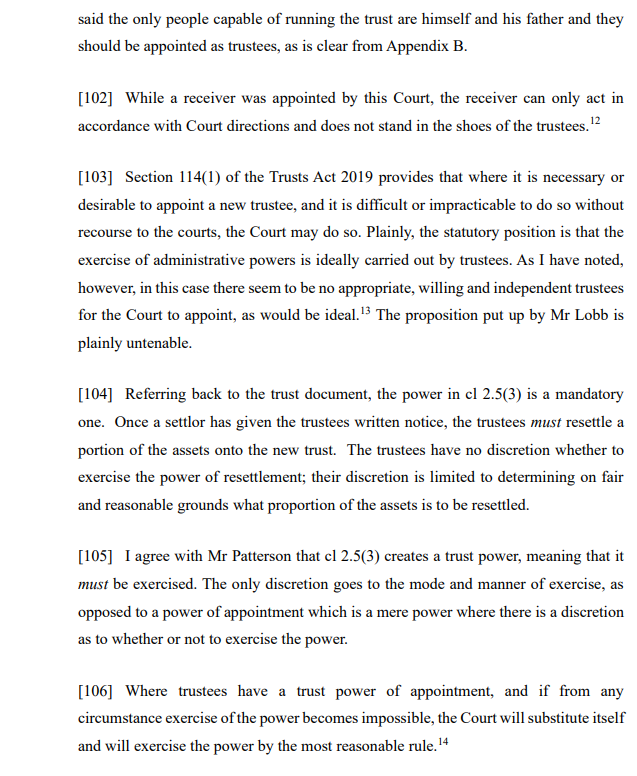

Given the particular facts and animosity between the parties, it may that Ryan v Lobb can be limited to its own facts. However, it is noted that the orders made addressed the fact that there was no trustee.
Returning to the key issue regarding the interpretation of the resettlement clause, it is noted that the background facts are complicated by a company owned and controlled by Mr Ryan (Lothbury Management Limited) claiming GST refunds and tax This aspect of matters was not addressed by the Court at this juncture.
With respect to the resettlement clause Hinton J makes the following salient points:

Also, as noted at [120]:

Hinton J ordered, amongst other things, that the Orakei property be sold by the receiver and that 50% of the proceeds of sale less costs ordered by the court be paid to the new trust settled by Ms Ryan.
Ryan v Lobb, as was also the case in Potter v Duffy, highlights the difficulties with resettlement provisions that may “make sense” in the context of an initial finite asset transfer, but become problematic following the passage of time and the attendant ebb and flow of trust assets and liabilities.
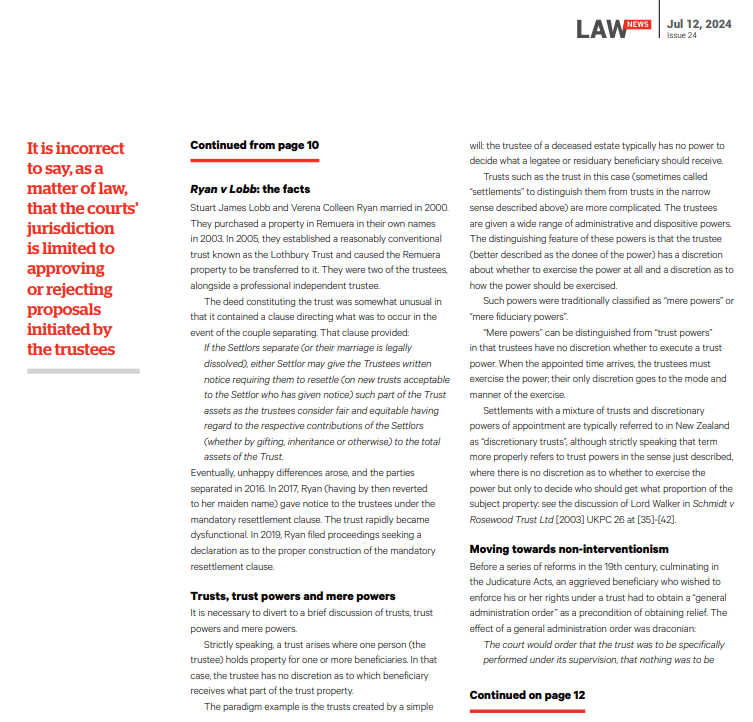
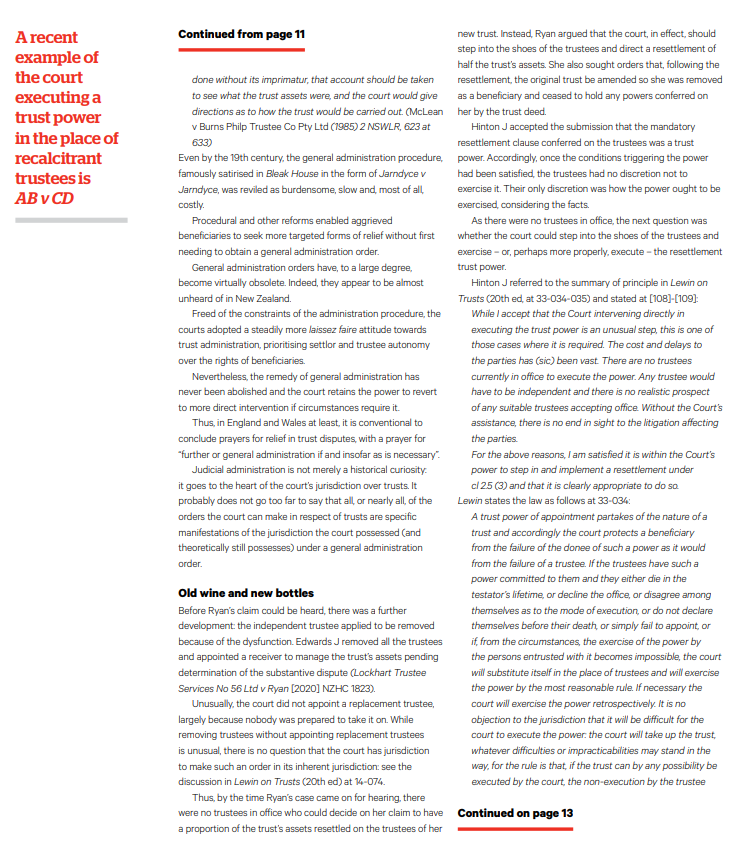
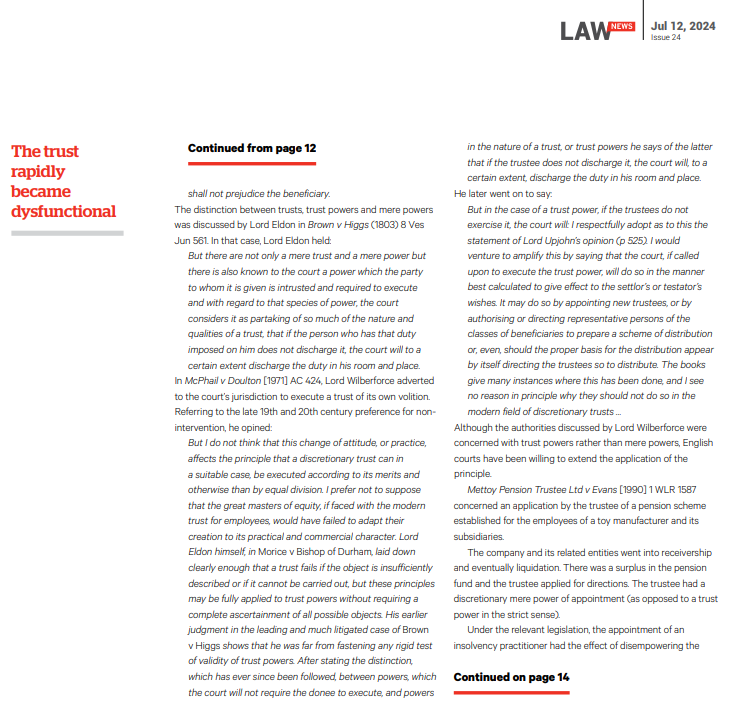
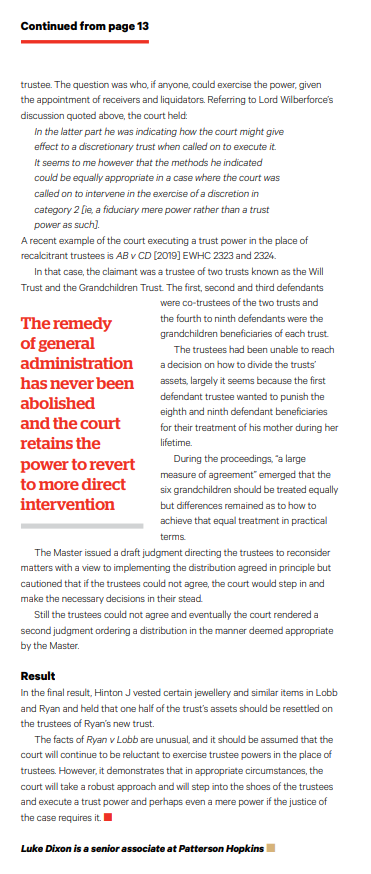
Also see Luke Dixon’s article in the Law News 12 July 2024:

References:
- Ryan v Lobb [2023] NZHC 689
- Ryan v Lobb [2020] NZHC 3085
- Ryan v Lobb [2021] NZHC 496
- Potter v Duffy [2015] NZHC 544
- Trusts Act 2019
- Lockhart Trustee Services No 56 Ltd v Ryan (as Trustee of Lothbury Trust) [2020] NZHC 1823
- McGowan and Valentini Trusts [2021] VSC 154
- Law News 12 July 2024
Legislation:

 Matters of Trust
How does a trust function in the absence of a trustee?
Posted by Kampus Terbaik | June 19, 2023, 10:35 pmThis will depend on the circumstances. If a receiver has been appointed the lack of a trustee may not represent an impediment. See Ryan v Lobb [2023] NZHC 689. If a sole trustee has died the trustee’s personal representative can exercise trustee powers and functions pending the appointment of a new trustee. See the Trusts Act 2019, s 102. Also see McGowan v Valentini [2021] VSC 154 regarding the construction of who a trustee is.
Posted by vickiammundsen | November 11, 2023, 4:18 pm