Dewart v Lal relates to an application for summary judgment to set aside a trustee resolution removing and appointing trustees of the Sanatan Dharam Trust (the Trust), a registered charity.
The decision is fact specific, but nevertheless provides excellent guidance regarding the interpretation of powers of appointment and removal.
When interpreting a trust deed, as noted at [42]:
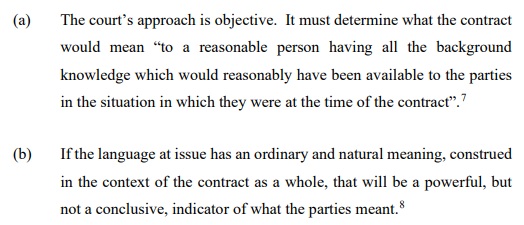

In the context of the case at hand, trustees were removed on the basis of decisions made (the validity of which was not determined by the court) as to the suitability of certain trustees. While trustee fitness for purpose can be an entirely relevant consideration; the starting point of any enquiry will be the terms of the trust.
The relevant provision in Dewat v Lal was:

As noted at [49] and [50]:

Associate Judge Sussock was of the strong view that clause 6.7(g) could not be interpreted to read member in the plural where there was more than one trustee that was being sought to be removed.
As noted at [68]:
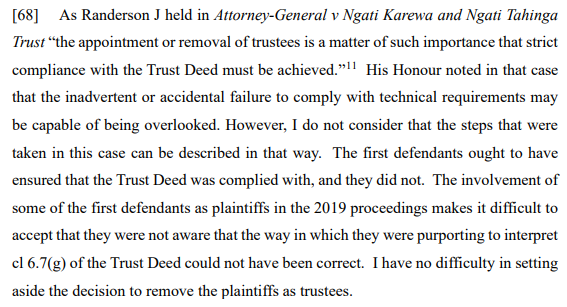
This highlights the importance of carefully reviewing trust deeds to ensure the proper execution of powers of appointment and removal.
Where trustees are invalidly appointed, their position is essentially void ab intio, notwithstanding any lack of wrongdoing on their part. This is clearly set out at [69] to [70] as follows:

References:
- Dewat v Lal [2023] NZHC 1908
- Attorney-General v Ngati Karewa and Ngati Tahinga Trust [2002] BCL 75
- Krukziener v Hanover Finance Ltd [2008] NZCA 187, [2010] NZAR 307
- Re Hayward Trustee Services Ltd [2022] NZHC 2217
- Firm PI 1 Ltd v Zurich Australian Insurance Ltd [2014] NZSC 147
 Matters of Trust
Discussion
No comments yet.