As noted at [91] in Gatfield v Hinton:

By way of wider observation in Gatfield v Hinton, Associate Judge Lester traverses the matters that will be taken into consideration when the Court is considering whether a matter should be referred to Alternative Dispute Resolution (ADR) pursuant to section 145 of the Trusts Act 2019. Relevantly as set out at [7] to [9]:
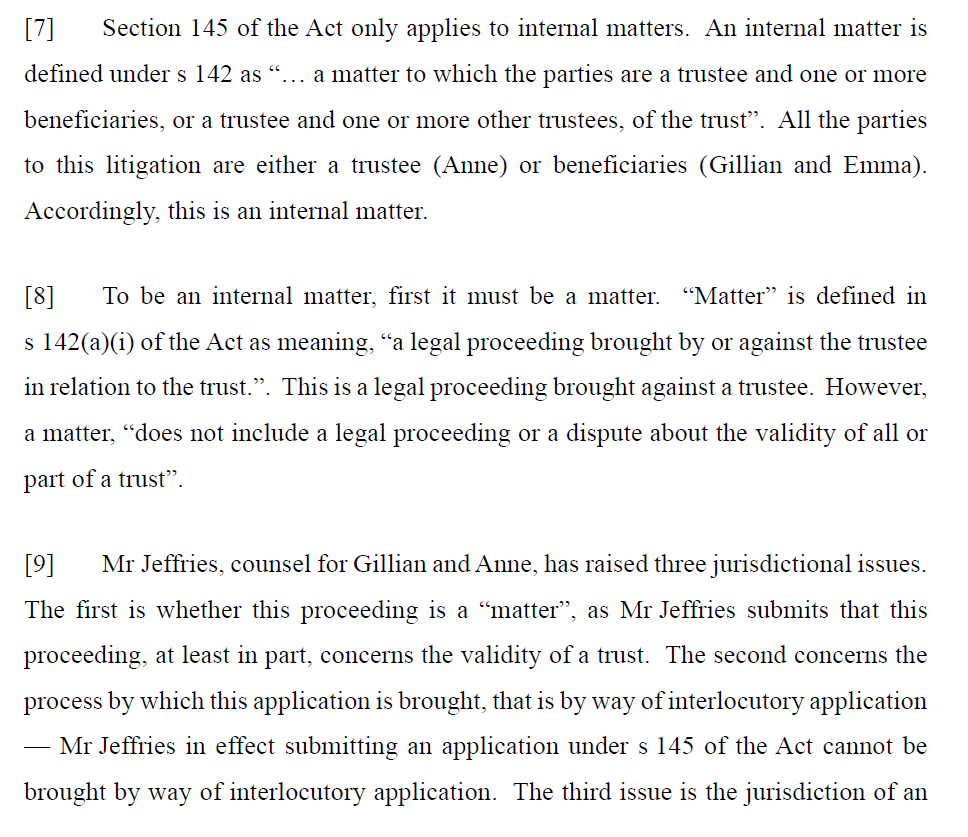

Associate Judge Lester was satisfied that the statement of claim (notwithstanding that the pleadings were somewhat undeveloped) were insufficient to concern the validity of an express trust. Associate Judge Lester was also satisfied that the proceedings could be determined by way of an interlocutory application. As noted at [41]:

The bulk of the arguments before the court related to when the court will order ADR and the relevant factors to take into account, which include:
- privacy (see [63])
- “Mediation is aimed at addressing the parties’ interests and not necessarily their strict legal rights” (see [64])
- an advantage of ADR is that, at least as regards mediation, the parties are not necessarily tied to pleadings when exploring issues and outcomes (see [65])
- cost considerations (see [67] and [68])
- the party’s views of a dispute can change. As noted at [83]: “Sometimes the benefit of independent advice leads a party to reflect on their part in the dispute and on the desirability of resolution.”
Note that leave to appeal has been granted.
References
- Trusts Act 2019
- Gatfield v Hinton [2024] NZHC 1712
- S v N [2021] NZHC 2860 [2021] NZFLR 756
- Wright v Pitfield [2022] NZHC 385
- Terry v Terry [2023] NZHC 884, (2023) 6 NZTR 33-019
- Boult v Crux Publishing Ltd [2022] NZCA 473
- Lawyers and Conveyancers Act (Lawyers: Conduct and Client Care) Rules 2008, r 13.4
- Gatfield v Hinton [2024] NZHC 2603
 Matters of Trust
Discussion
No comments yet.