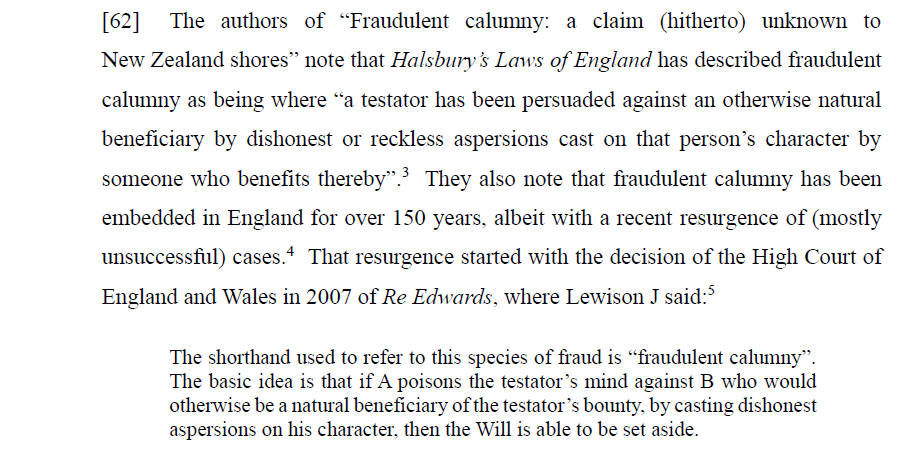
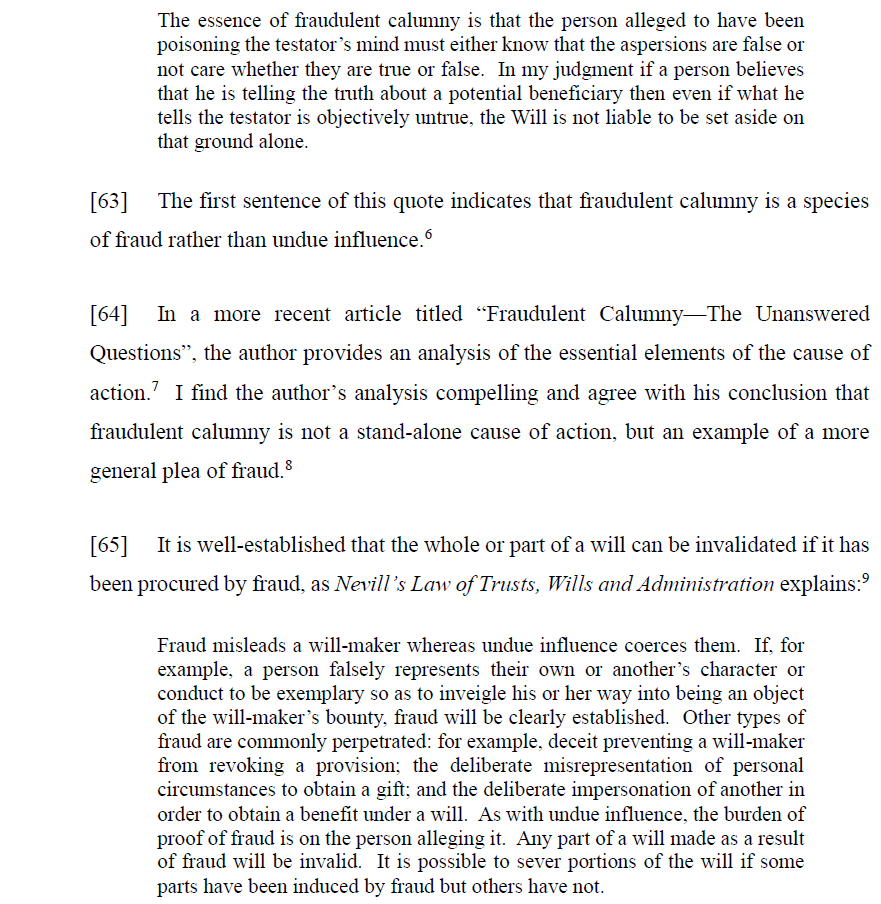
As noted in Lowe v Ngan the cause of action fradulent calumny has not previously been recognised in New Zealand. This statement is expanded on at [62] to [65] as follows:
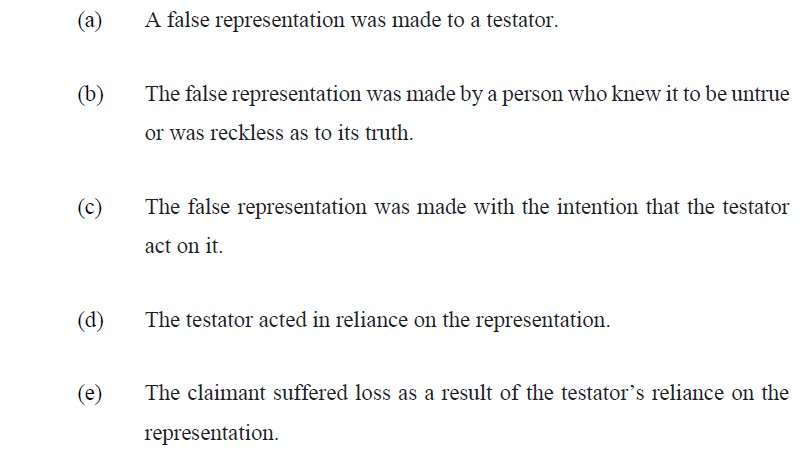
The elements of fraudulent calumny are set out in Lowe v Ngan as follows:
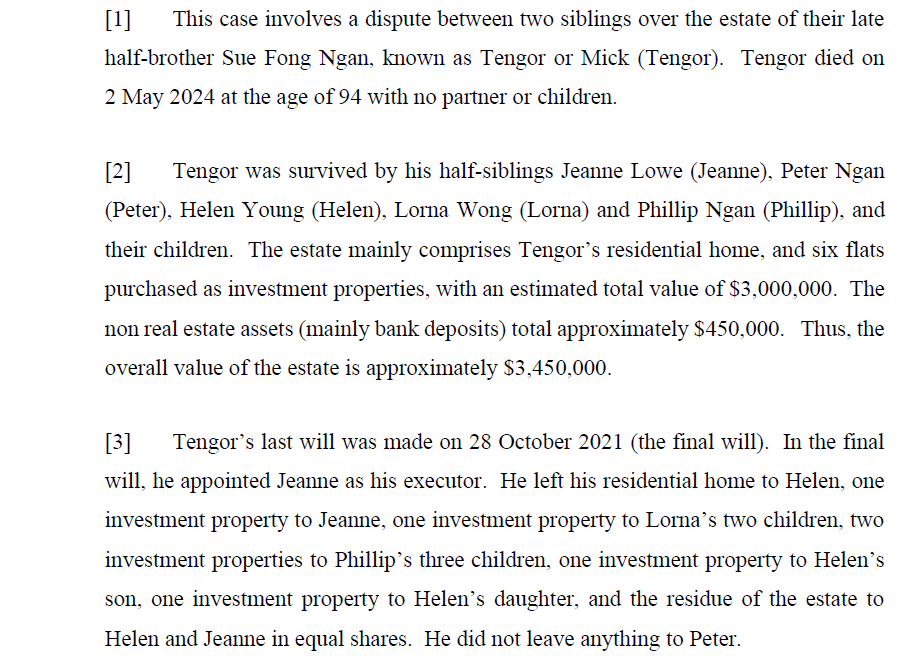
Byway of background to Lowe v Ngan:
In Lowe v Ngan the claim of fraudulent calumny failed because “… there is no clear and cogent evidence that Helen lacked a genuine belief in the truth of her false representations that Peter had defrauded Tengor. Although Helen formed her view based on a cursory assessment of limited information, Tengor’s lawyer’s advice and Peter’s actions provided some support for her position. The genuineness of her view is indicated by her continued efforts to pursue Peter for the fraud after Tengor had already removed Peter from his will. Helen is a person quick to make judgements and difficult to budge from those judgements once made. I consider she has, and continues to have, a genuine but incorrect view that Peter defrauded Tengor.”
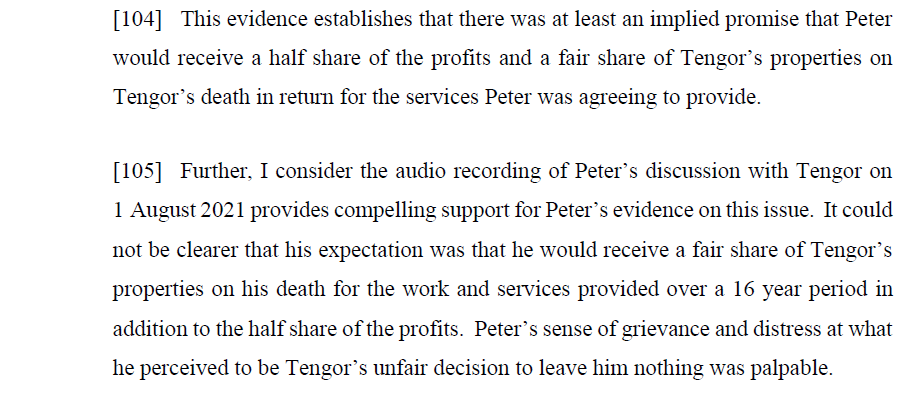
However, the alternative cause of action under the Law Reform (Testamentary Promises) Act 1949 was made out. The background to this claim was set out at [104] to [106] in the following terms:
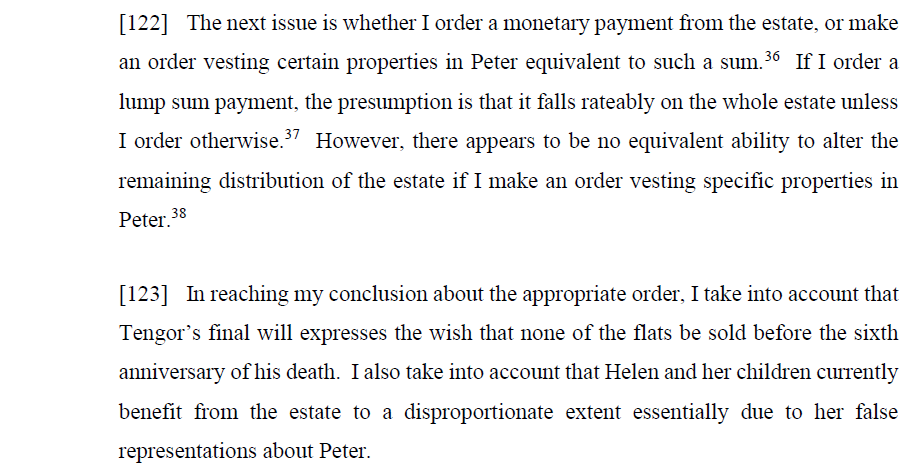
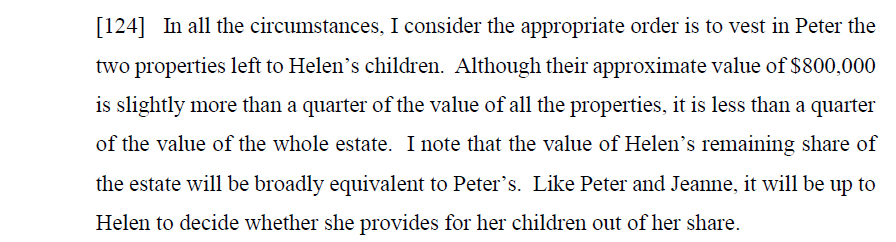
In determining an appropriate award to Peter, the court did take the false representations into account:
In a recent UK decision in Ginger v Mickleburgh a claim of fraudulent calumny succeeded.
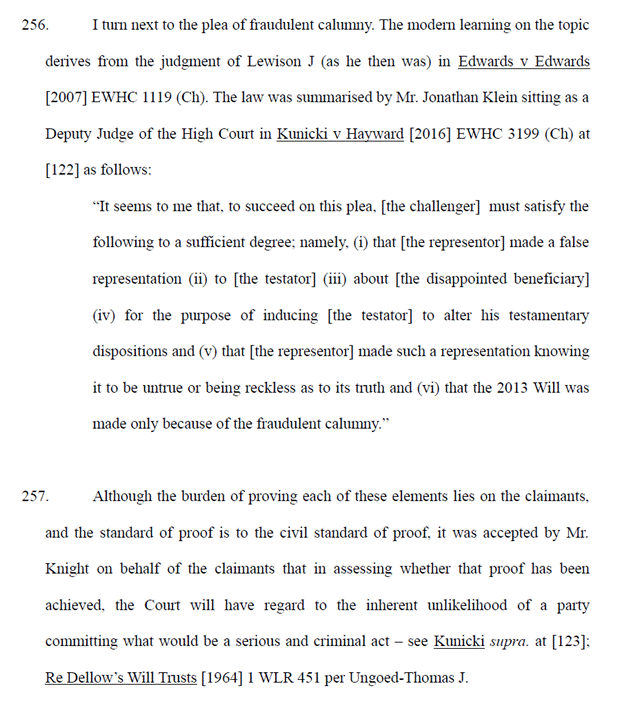
As noted in that case at [256] to [257]:
The deceased in Ginger v Mickleburgh (Michael) suffered from significant mental health issues, which it was argued that Sheila used to poison Micheal’s mind against his daughters, one of whom assisted in Michael being sectioned under the mental health legislation. The Court concluded at [273] that:
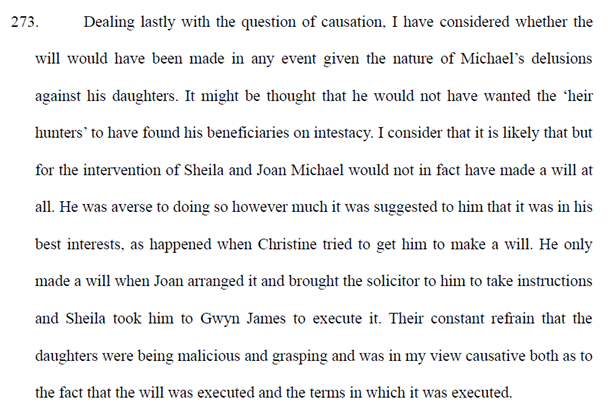
This finding meant the purported will failed leaving Michael intestate. This meant that his estate was divided between his four daughters, which the judgment indicated was most likely what he wished.
References:
- Ginger v Mickleburgh [2026] EWHC 100
- Lowe v Ngan [2026] NZHC 519
- Re Edwards [2007] EWHC 1119
 Matters of Trust
Discussion
No comments yet.